
Hydroponic green forage (FVH) is a plant biomass production technology obtained from the initial growth of plants in the germination stages and early growth of seedlings from viable seeds. The FVH is live fodder, high digestibility, nutritional quality and very suitable for animal feed. In practice, the FVH consists of the germination of grains (cereal or legume seeds) and their subsequent growth under controlled environmental conditions (light, temperature and humidity) in the absence of soil. Oats, barley, corn, wheat and sorghum seeds are usually used.
Biosolx technology offers low operating costs and requires minimal work Depending on the size of the system, the pica operation takes only 15 to 60 minutes per day to harvest, clean and plant the forage system. The energy costs of Biosolx systems are very low since they are very well insulated and designed to be extremely efficient
In addition, since your livestock will provide you with more profits, you can recover your initial investment in a relatively short period of time. This is something to consider, especially if you are interested in modern agricultural opportunities that can increase your productivity, allowing you to get the most out of it. The future belongs to innovative farmers who are not afraid to accept progress and put it into practice on their farms.


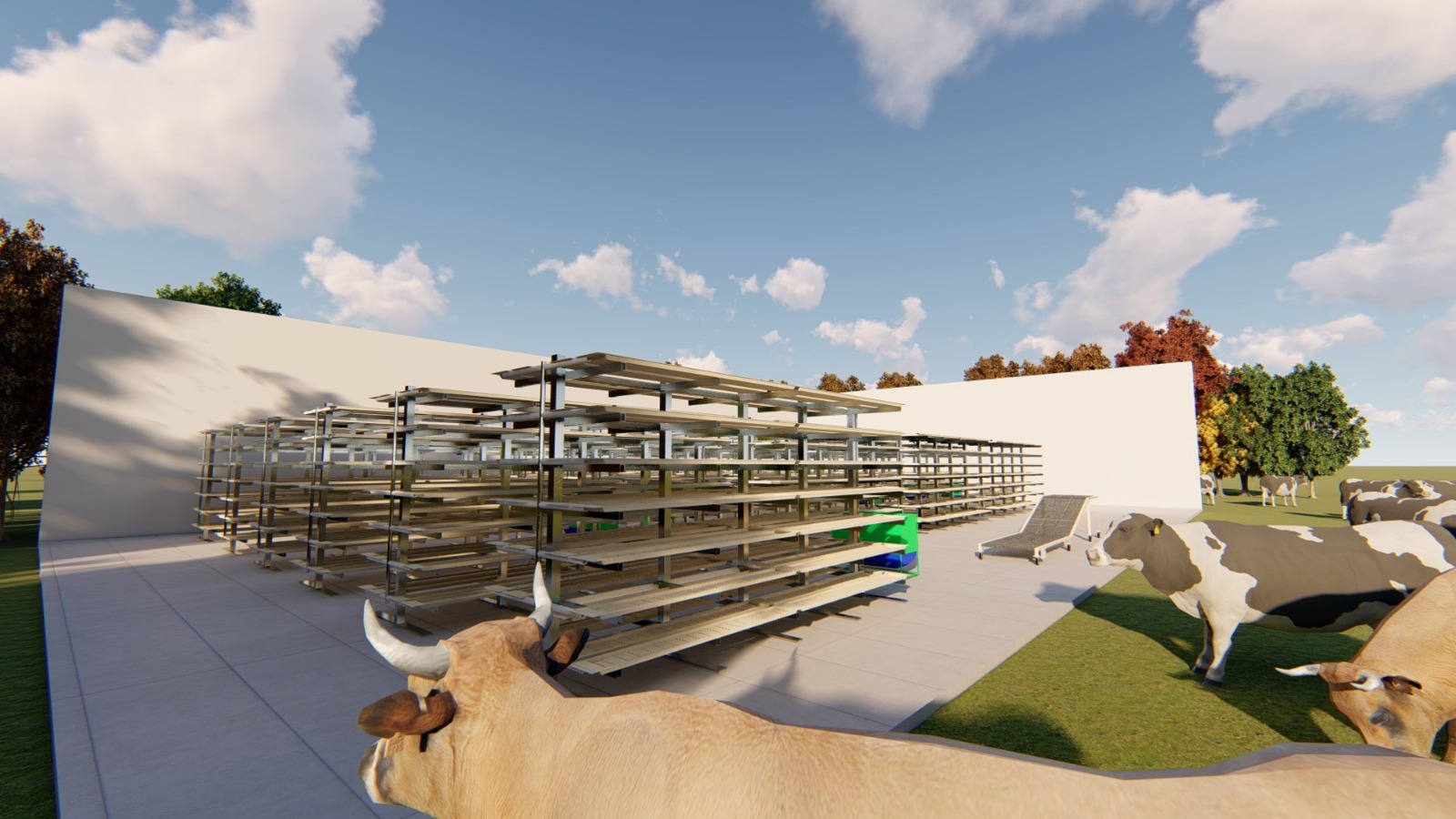

The FVH has been used in several species of animals (goats, rabbits, cows, etc.), and its main lack, as a basic diet, lies in its low DM content, which can be solved by adding stubble from various crops to complete laration. , components that are not only easy to find, but also cheap

• It is produced in a small space.
The system allows high density planting (8 kg of seed / m²).
• Little water is required.
In a FVH production system the water used is recirculated, watering for only 3 minutes per day.
• The investment is up to 10 times less, to buy agricultural land for fodder production.
• Increase in the production, fat content and total solids of the milk of grazing cows.
* Improves the body condition of the animal, reduction of empty days, lower incidence of mastitis and less retention of placenta.
LIVE STOCK CATTLE
Increases greater than 1.7 kg of daily weight have been reported with 10 - 12 kg of FVH and 5 kg of concentrates. In addition, the assimilation of the concentrate is improved, costs decrease and fattening time decreases. In dairy cattle, in addition to lowering costs, milk production has increased by 7.2% in poultry with a production greater than 28 liters milk / day, and in low production cows 14 liters milk / day, the increase has been 53%. Arano (1998) reports increases in 15% to 25% of milk production in feedstuffs fed with barley FVH compared to control cows.
NUTRITIVE VALUE GREATER THAN OTHER FORAGES
The FVH is a high quality forage, superior to other forages, which is supplied completely (leaves, seeds, sizes, roots, etc.). Its appearance, color, flavor and texture give it great palatability.
Feed of LIVE STOCK CATTLE with Hydroponic Green Forage (FVH)
In beef cattle, a decrease in yellow fat and a higher proportion of white fat has been observed; in addition to the meat has an excellent appearance.
For this type of cattle it is recommended to supply 13 kg of Hydroponic Green Forage (FVH) in the lifting stage, while in the fattening stage 17 kg of Hydroponic Green Forage should be supplied ( FVH).

Biosolx fodder systems offer many environmental benefits of great impact. These include dramatic reductions in water, land, energy and equipment. The total impact of converting a farm or dairy into highly efficient biosolx fodder systems and water can make a big difference in the 'greening' of the planet.
· Use 98% less water to grow food
· Reduce the need for equipment and fuel used to plant, grow, harvest, transport and store food
· Promote sustainable agriculture
· Promote natural, organic and grass-fed livestock.
Protecting water is very important. Water conservation technology is the core of biosolx designs that use a RE-CIRCULATORY irrigation system. Agriculture is under increased pressure from governments and environmental advocacy groups to reduce water use. Biosolx germination systems produce 1000 KILOS of sprouts with just over 600 liters of water used per day. That is up to 98% less water than irrigation agriculture used to produce the same amount of fodder.
Biosolx germination systems use compact and vertical cultivation methods. Vertical systems are the key to the production of high volume of fresh fodder in a small space. Commercial systems can produce up to 280 kilograms of fresh food per square meter of land per year. This amounts to huge savings in the land needed for food production. Users report that a biosolx system of 1 ton per day is equivalent to 50 SQUARE METERS OF GOOD GRASS
Low-energy biosolx systems reduce the need for equipment and fuel used to plant, harvest, transport and store animal feed. The shoots are grown indoors throughout the year in highly specialized growing equipment that uses less fertilizers, without pesticides, and can be organically approved.
High-quality agricultural land around the world is rapidly shrinking due to development, population expansion and excessive use. Biosolx's energy, land and water designs offer sustainable and intensive agriculture that can help feed the growing population.